


Culinary Misattribution: The Accuracy of Nationally Named Foods
Updated: 50 minutes ago

Due to American obesity rates, the perception of American cuisine is often cited as being fast food or fast-casual restaurants. However, this doesn't mean that fast food and fast casual are the only things Americans eat. There are plenty of foods that can be found on American grocery store shelves that are actually from other countries. However, this can lead to many people believing that the locals from that country actually eat that same thing the same way that Americans do. Which isn’t always the case.

For example, a frequent staple of American fast food is the French fry. It isn’t entirely known who invented the French Fry. There is disagreement about if they were invented in Paris sometime before 1789 or in Belgium in 1781. However, French fries don't have to originate in France to get the “French” title. It is possible that the fries are named after how they are prepared. In cooking, cutting them into long, thin, uniform strips is known as Frenching, among a few other names. There is also a theory that Americans deployed to Belgium in World War I, heard the French-speaking Belgians and misattributed the local pommes frites as French fries. There are a few other theories about the origin of French fries, but these are the common
ones that relate to France. The French and French-speaking Belgians do not call the food “French Fries”. Instead, they say “pommes frites” or “fried potatoes” in English. There are plenty of other examples where, if a national food exists and is named after the country, such as French Fries, the country of origin does not use the national adjective.
Swiss cheese is an umbrella term of sorts. The Swiss cheese most people think of with the big holes in it is made with raw cows’ milk from cows living in the Alpine Valleys. This is known as Emmental AOP. Swiss cheesemakers also have a variety that doesn't have holes. In addition, Americans have made a few varieties that are American inventions; these are known as Baby Swiss and Lacy Swiss. The holes in Swiss cheese occur during the cheese-making process, where the cheese is aged and bacteria release carbon dioxide trapped inside the cheese.
On some occasions, the food itself may be named after a culture, but it is misattributed entirely.

It is believed that a common baking technique for Danish pastries actually came from Austrian bakers In the 1850s. it should be noted that in Denmark, the pastries are called wienerbrød, directly translating into English as “Vienna Bread”. While in Austrian German, the pastries are referred to as either Kopenhagener Plunder or Dänischer Plunder, translated as “Copenhagen pastry” or “Danish pastry” in English.
Russian tea cakes are another example of a food not coming from the country attributed to it. it is not known where the recipe for Russian tea cakes came from. However, their appearance resembles that of other cookies from the region. These similar cookies are often enjoyed with a cup of afternoon tea. In addition, “Russian tea parties” became popular for fundraising events in the United States during the 19th century. Russian Tea Parties were very popular with upper-class Americans in the 1880s. During these “tea parties”, what we now call Russian tea cakes would often be served. It is possible that the dessert was named after the party where it was served.

It should be noted that there were Arab and Turkish predecessors to Russian tea cakes. In Turkish, these are called kurabiye. These Arab and Turkish desserts still exist today and are still popular. Mexico has its own take on this dessert that they got from Spain (that got it from the Turks), known as polvorónes. During the Cold War in the mid-20th century, American authors noticed that Mexico made the dessert for Weddings. They took this information and named the dessert “Mexican Wedding Cookies”, completely separate from Mexico, the country. In Russia, the closest version of this dessert is either pryanik – a soft, spiced honey gingerbread or korzhik – a hard sour-cream biscuit. From 1881 and 1914, roughly 3.2 million people left the Russian Empire, and most migrated to the U.S. During this time, Russian Tea, the cakes, and the parties migrated, became popular, and deviated from their European immigrant roots. Given that Russian Tea Cakes resembled other desserts in the region, it could be an instance where the original European recipe was actually from a non-Russian people group, but then American cookbooks Russified it, and this went unnoticed. As Russia has been in control of a huge landmass since 1700, it doesn’t seem too far-fetched to believe. This is a story of misattribution in favor of marketing and possibly miscommunication over the centuries.
If a food is not consumed often by the culture it’s named after, it could have come from a local culinary invention to cater to the local taste. This was
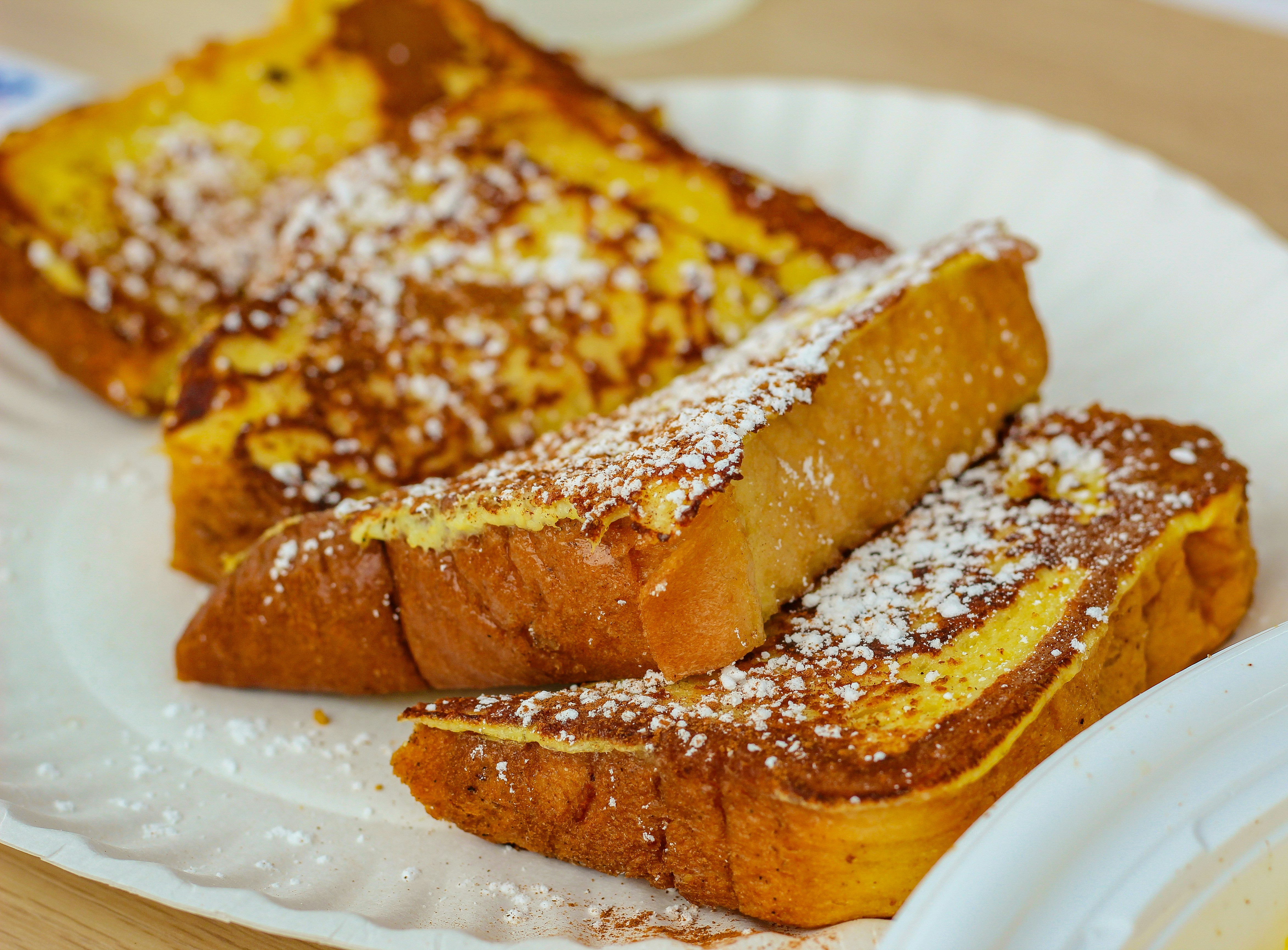
the case with Russian Tea Cakes. But many foods are pure inventions of American cookbooks. For example, French salad dressing, Italian salad dressing, and Italian seasoning were all American inventions to replicate the “taste” of France and Italy. Even French Toast, in its modern form, is an American culinary invention.

This replication process happens in other cultures as well. In Europe, there is a whole fast-food marketing industry around American-branded products that Europeans actually invented to cater to European tastes. In the American market, there are plenty of foods that are mislabeled to cater to the idea of the food being exotic to make it more interesting on the store shelf. There are many examples of this, including “German chocolate cake” and Swiss Miss, which are from Texas and Wisconsin, respectively.
In the modern day, we have access to more food options than ever before in history. This is true almost anywhere across the globe due to increased globalization and trade. The result has been a desire to connect with peoples from entirely different cultures. In the age of social media and especially with the rise of AI, I believe that we as people are trying to seek out authenticity more and more every day. Food is the center of our lives as it provides us with fuel, community, and strength. People underestimate how much local taste contributes to foods that claim they are from another culture. Try a Chinese food restaurant that is in the United States; many dishes on that menu are purely American inventions, as you would not find them in China. In places such as Vietnam, they give out two different menus. One is in Vietnamese and has all of the local dishes on it in their spicy authenticity. The other menu is in English, and the dishes on it are not as spicy. This is done to cater to foreigners’ expectations and taste palettes.
There is only so much authenticity you feel like you'll get when you are not in the same environment and atmosphere as the locals whom you believe are eating dishes named after them in your language. While this is true for many names, there are a few foods named after their region of origin where the locals actually consume the food often. This article has focused on a few such examples, like Swiss cheese. But there are others such as English muffins, Belgian waffles, and Greek yogurt. Greek yogurt actually extends beyond Greece, where it is commonly consumed in the surrounding regions of the Mediterranean, Central Asia, and the Middle East. By understanding how national foods got their name, people can better prepare for when they travel and engage in culinary discussions.


Comments